
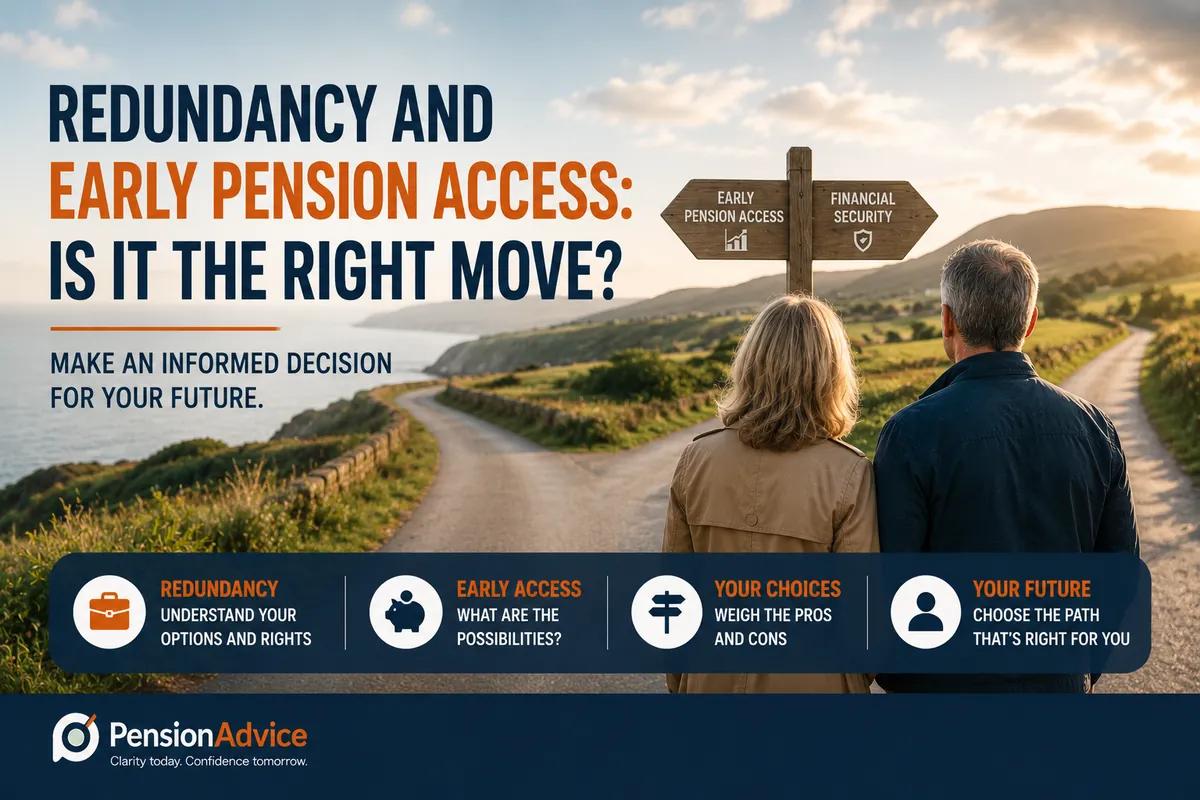
Redundancy at 50-plus opens a door that's usually closed until much later: immediate access to your pension.
For most people, private pensions stay untouchable until 50 at the earliest, and 60 for many personal pensions and PRSAs. Redundancy doesn't change those rules — it simply means that if you're already past the threshold, the pension attached to the job you're leaving becomes accessible now rather than at some point in the future.
It's one of the least understood benefits available to older workers facing job loss, and one of the easiest to get wrong if you rush into it. This isn't a decision to make in the same conversation where you're told your role is being made redundant. It deserves its own separate, considered look.
6 Things to Weigh Up
Turning 50 unlocks a genuine option, not an obligation
If you're 50 or over at redundancy, you may be eligible for immediate pension access. That doesn't mean you should take it automatically — it's simply one option on the table.
It can provide a bridge, not just a bonus
For some people, early access provides useful income while job-hunting or adjusting to reduced earnings. For others, it's an unnecessary trade-off of future growth for present cash.
The tax interaction with your redundancy payment is critical
Taking a pension lump sum reduces the Increased Exemption on your redundancy payment and lowers your SCSB calculation. Making informed decisions before you sign anything matters a lot here.
You're using up your lifetime allowance either way
Whether you access now or in ten years, the €200,000 lifetime tax-free lump sum cap applies. Accessing early doesn't cost you allowance, but it does mean less time for the rest of the fund to grow.
Consider your full financial picture, not just this pension
Redundancy pay, savings, Jobseeker's Benefit, and other pensions should all factor into whether accessing this pension now is actually necessary.
This decision is generally irreversible
Once you've taken the lump sum and moved the rest into an ARF or annuity, there's no undoing it. It's worth being certain rather than reactive.
The Case For Accessing It Now
There are genuine situations where early access makes sense. If you're clearing high-interest debt, if your redundancy payment and Jobseeker's Benefit won't comfortably cover a job search that could run several months, or if you're confident this was your last working chapter and you're ready to structure a retirement income now, accessing the pension can be the right call. It converts an asset you can't currently use into income or a lump sum you actually need, at a moment when that flexibility has real value.
The Case For Leaving It Invested
The counterargument is just as real. If you're likely to find new work, even at reduced hours or pay, the pressure to access this pension immediately often eases. Every year a fund stays invested is another year of potential compound growth, and pulling money out during a period of market weakness locks in a lower value than waiting might have delivered. There's also the lifetime tax-free lump sum allowance to consider: using it now for money you don't strictly need means it's unavailable later, when you may have a clearer, more pressing use for it.
A Worked Example
Consider two people, both 54, both made redundant with a pension fund worth €150,000. The first takes a tax-free lump sum of €37,500 (25%) straight away and moves the balance into an ARF, immediately triggering ongoing management decisions and, from age 61, mandatory minimum withdrawals. The second leaves the fund untouched, takes up part-time consulting work, and revisits the decision at 58 once their financial picture is clearer. Neither choice is automatically right — the first suits someone who needs the cash now and is comfortable managing an ARF; the second suits someone who can afford to wait and values simplicity. The point isn't which one is better in the abstract, it's that both are genuinely available, and the right one depends entirely on your own numbers.
Questions Worth Asking Yourself First
Do I actually need this income now, or would Jobseeker's Benefit and my redundancy payment cover the gap? Would taking a lump sum now cost me tax relief on my redundancy payment? Do I have other pensions that could be reviewed alongside this one? Is there a strong reason to access this fund now rather than let it keep growing? Sitting with these questions before acting tends to produce better outcomes than deciding under pressure in the weeks right after a redundancy announcement.
Weighing up early access? We'll help you work through the numbers alongside your redundancy package — at no obligation.
Important information: This article is for information purposes only and does not constitute financial or tax advice. Rules are current as at July 2026 and subject to change. Always seek professional regulated advice before making decisions about your pension. Gen Z Financial Solutions Limited trading as Pension Advice is regulated by the Central Bank of Ireland.